Our Services
Reliable Pile Testing & Structural Testing Services Across India
Shyam Geopile Technologies Private Limited delivers accurate testing, engineering analysis, and technical consultancy for deep foundations, superstructures, bridges, buildings, and industrial projects.
About Our SERVICES
Our Testing & Engineering Services
At Shyam Geopile Technologies Private Limited, we offer a comprehensive range of non-destructive testing and engineering services — from deep foundation assessment to structural load evaluation. Whether you’re working on a high-rise building, a highway bridge, or an industrial facility, our team brings the expertise, equipment, and precision your project deserves.
Every test we perform is backed by experienced engineers, modern instruments, and a commitment to accurate, compliant reporting.
Pile Testing & Foundation Engineering
Foundations are the backbone of any structure. Our pile testing services help you verify the integrity, load capacity, and quality of your foundations, before problems arise or after concerns surface.
Static Load Test on Pile (Vertical, Lateral & Pull-Out)
The Static Load Test is the most direct method to measure a pile’s actual load-bearing capacity. We conduct three types:
- Vertical Load Test: Checks how much downward load a pile can carry
- Lateral Load Test: Evaluates resistance to horizontal forces like wind or seismic loads
- Pull-Out (Uplift) Test: Assesses how well the pile resists upward tension forces
This test is ideal for critical infrastructure projects where design assumptions need to be physically confirmed on-site.
High Strain Dynamic Pile Load Test (HSDPT / PDA Test)
The PDA (Pile Driving Analyzer) Test is a faster and more cost-effective alternative to static testing. Using sensors attached to the pile head, we measure strain and acceleration during a controlled hammer impact. This data tells us the pile’s bearing capacity, integrity, and driving efficiency — all in a single field operation.
It’s widely used for driven piles and is accepted by most national and international engineering codes.
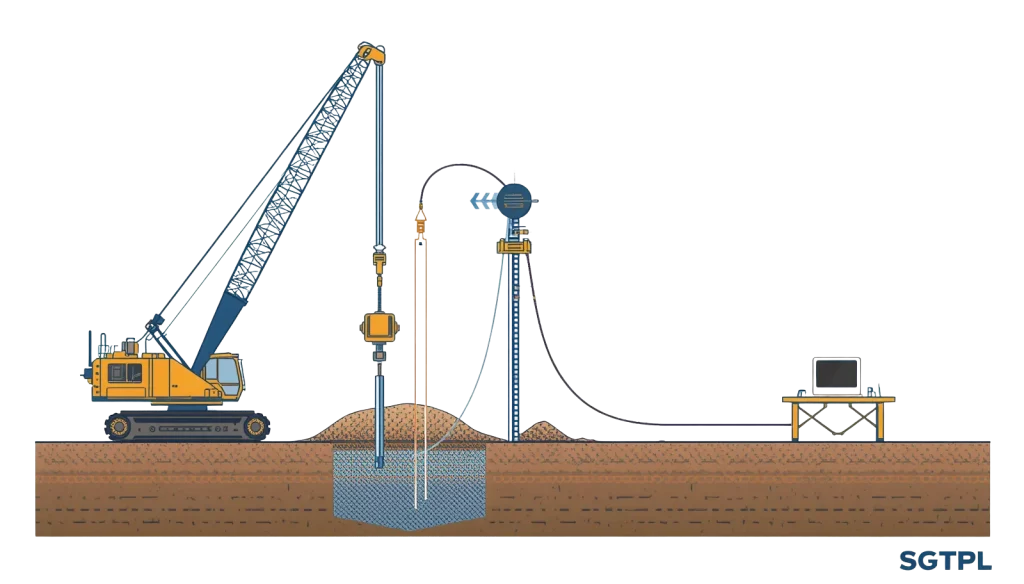
Low Strain Pile Integrity Test (PIT / LSIT / PET)
This quick, non-destructive test checks whether a pile is continuous, defect-free, and properly constructed. A small impact is applied to the pile head, and the returning stress wave is analyzed. Any cracks, voids, necking, or anomalies within the pile are identified without excavation or damage.
It’s a practical quality check for large numbers of piles on a project site within a short time frame.
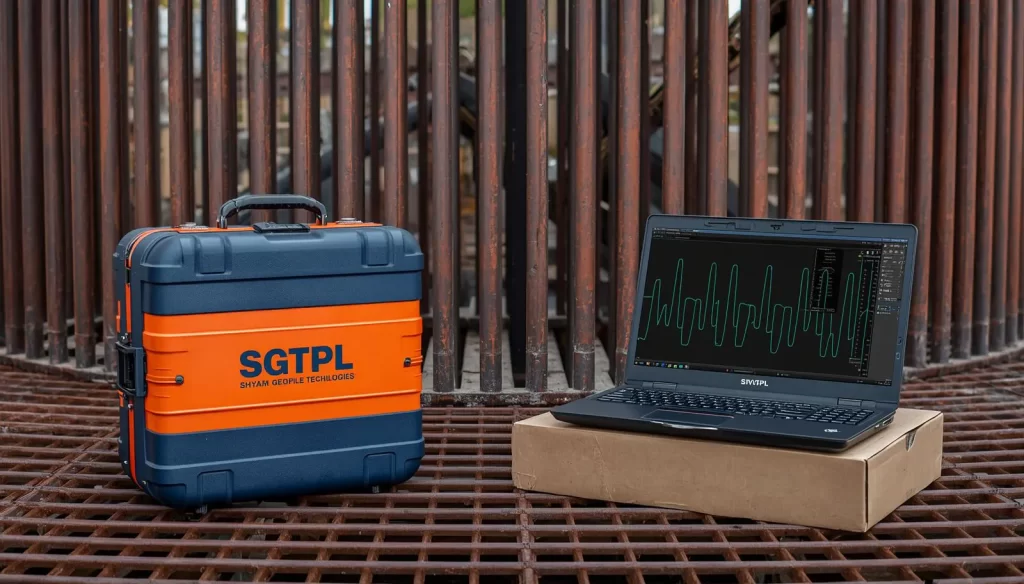
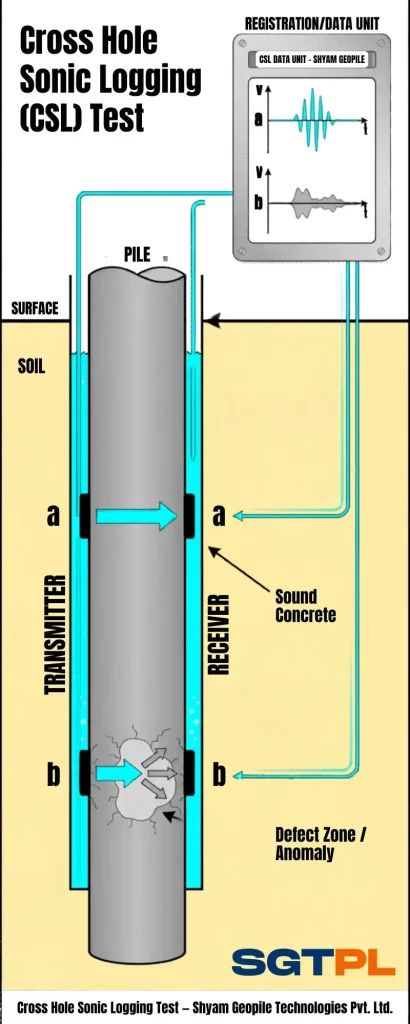
Cross Hole Sonic Logging Test (CHSL / CHA / CHUM / CSL)
For bored cast-in-situ piles, the CSL test provides highly detailed information about concrete quality throughout the full depth of the pile. Ultrasonic probes are lowered into pre-installed access tubes, and the travel time of sound pulses between tubes is analyzed.
This test detects inclusions, soft zones, and concrete defects that are not visible to visual inspection — making it especially valuable for large-diameter or high-capacity foundation piles.
CAPWAP Analysis
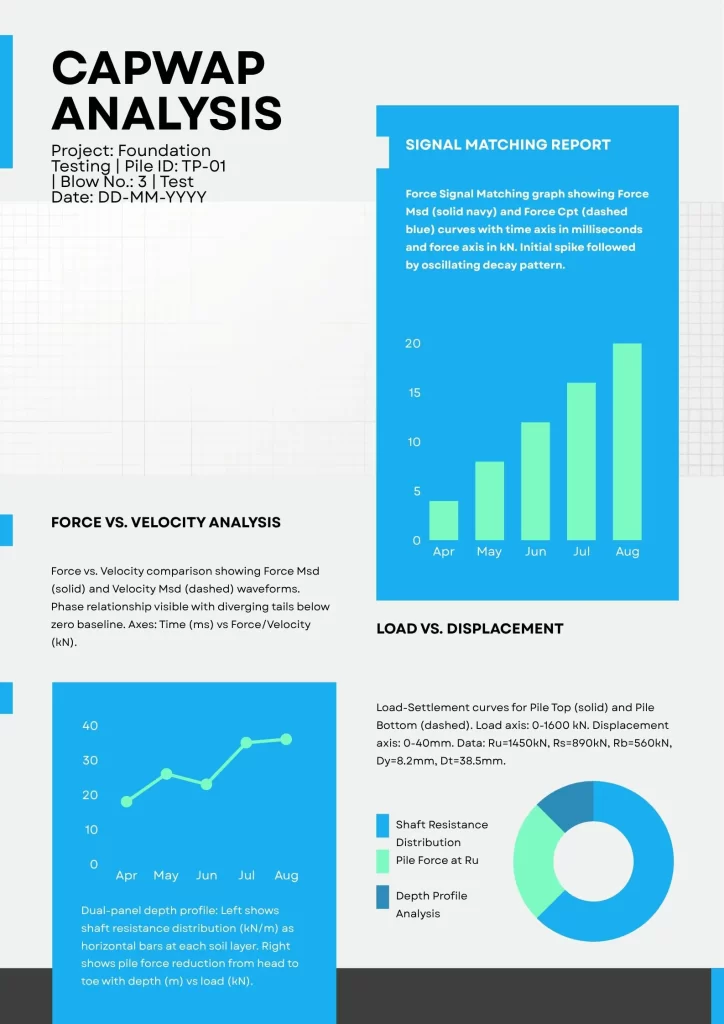
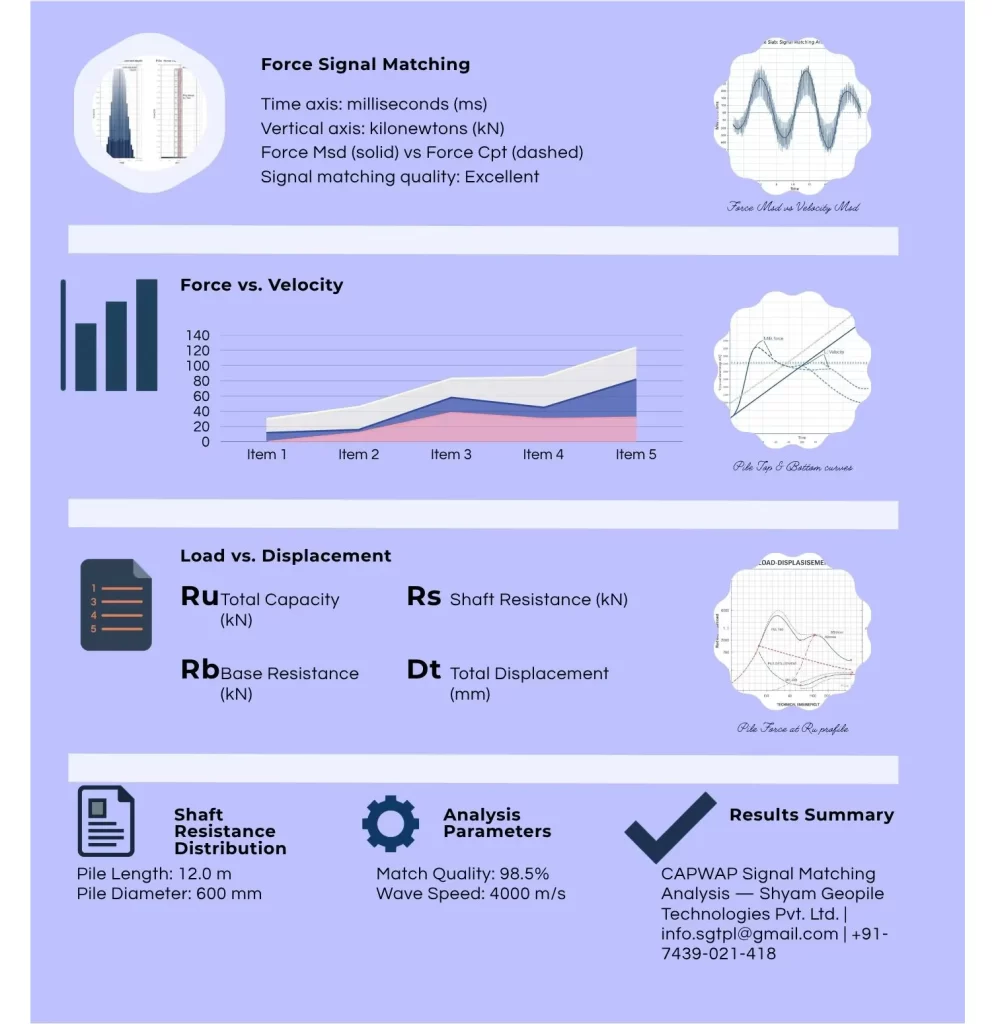
CAPWAP (CAse Pile Wave Analysis Program) is an advanced signal-matching software analysis performed on data collected during the PDA Test. It separates the contributions of shaft friction and end bearing, and provides a refined estimate of total pile capacity.
This analysis is often required by consultants and project engineers as part of a complete pile testing report.
Third Party Report Review & Consultancy
Already have a pile testing report but not sure how to interpret it? Our senior engineers provide independent review and technical consultancy services. We evaluate existing test data, identify discrepancies, and give you a clear, unbiased second opinion — useful for dispute resolution, quality audits, or regulatory compliance.
Concrete & Structural Testing
Concrete is only as reliable as its condition. Over time, exposure to moisture, load cycles, and environmental agents can degrade structural concrete. Our concrete testing services help you understand the true health of your structure, without breaking it apart.
Ultrasonic Pulse Velocity Test (UPV / USPV)
The UPV Test measures how fast ultrasonic pulses travel through concrete. Higher velocity indicates denser, higher-quality concrete, while lower velocity flags areas of cracking, voids, or poor compaction. It is a fast and widely accepted method for assessing concrete uniformity and estimating compressive strength.
Half Cell Potential Meter Test (HCPMT)
Corrosion of reinforcement steel is one of the most common and costly causes of structural deterioration. The Half Cell Potential Test measures the electrochemical potential on the concrete surface to identify areas where embedded rebar is actively corroding or at risk of corrosion. Early detection through this test can prevent expensive structural repairs later.
Rebound Hammer Test (RH)
The Schmidt / Rebound Hammer Test is a quick, in-situ method to estimate the surface hardness of concrete, which correlates to its compressive strength. It is often used for preliminary screening of structural members, quality control checks during construction, or assessment of older structures.
Carbonation Test (CT)
Over time, carbon dioxide from the atmosphere penetrates concrete and lowers its pH — a process called carbonation. When the carbonation front reaches the reinforcement, corrosion begins. The Carbonation Test uses a phenolphthalein indicator on freshly broken or drilled concrete to measure how deep carbonation has progressed. This helps assess long-term durability and remaining service life.
Concrete Core Test
When you need the most direct evidence of in-place concrete strength, core testing delivers it. Cylindrical cores are drilled from the actual structure and tested in a laboratory for compressive strength. This method confirms whether the concrete meets design specifications and is commonly required for dispute resolution, renovation assessments, or structural safety evaluations.
Structural Load Testing
When a structure needs to prove its performance under real-world conditions, load testing provides the most conclusive evidence. Our structural load testing services are carried out by experienced engineers with calibrated equipment and standardized procedures.
Bridge Load Test
Bridge load testing involves applying controlled loads — typically through loaded vehicles or hydraulic systems — and measuring deflections, strains, and structural responses at critical points. It verifies whether a bridge performs as designed, identifies any unusual behavior, and confirms fitness for continued use. This is especially important for older bridges, bridges after repair, or newly constructed crossings before formal handover.
Slab Load Test / Span Load Test
Slabs and spans in buildings, parking decks, and industrial floors are tested by applying known loads and measuring deflections at key locations. The test confirms that the structural element carries loads safely within acceptable deformation limits. It is commonly required before commissioning floors with heavy machinery, storage loads, or public occupancy.
Reinforcement & Structural Assessment — Cover Meter Test
The Cover Meter Test uses electromagnetic (eddy current) technology to locate embedded reinforcement bars without damaging the concrete. It accurately measures:
The position and depth of rebar (cover depth)
Rebar spacing and bar diameter
Adequate concrete cover is essential for protecting steel from corrosion. Insufficient cover is a major cause of premature structural deterioration. This test is used during quality control inspections, structural audits, and pre-repair assessments.
Not sure which test you need?
Every project is different — and choosing the right test depends on your structure type, project stage, and specific concerns. Our engineers are happy to guide you, explain your options, and recommend the most cost-effective testing approach for your requirements.